
Key Takeaways
- Mining pools combine hashrate from multiple miners to deliver frequent, predictable payouts, over 99% of Bitcoin blocks are now mined by pools, making solo mining statistically impractical in 2026.
- Your choice of reward model (PPS, FPPS, PPLNS) and pool provider directly impacts profitability, with factors like fees, uptime, Stratum V2 support, and regulatory compliance all shaping long-term returns.
- The mining industry is converging with AI and compute infrastructure, as operators repurpose data centers for AI workloads and pools evolve from simple aggregators into full-stack financial platforms.
In the early days of Bitcoin, a hobbyist could mine thousands of coins using a simple laptop CPU. Today, the landscape is unrecognizable.
With Bitcoin’s network hashrate now exceeding 1,000 EH/s (as of May 2026) and mining difficulty sitting at roughly 132 trillion, the days of solo mining profitability are effectively over for all but the most massive industrial operations.
Modern mining is an industrial-scale competition where hashpower is the currency of success. In this high-stakes environment, mining pools have emerged as the critical infrastructure layer that makes Proof-of-Work (PoW) mining viable, predictable, and scalable for institutions of every size.
What Exactly Is a Mining Pool? Definition and Core Mechanics
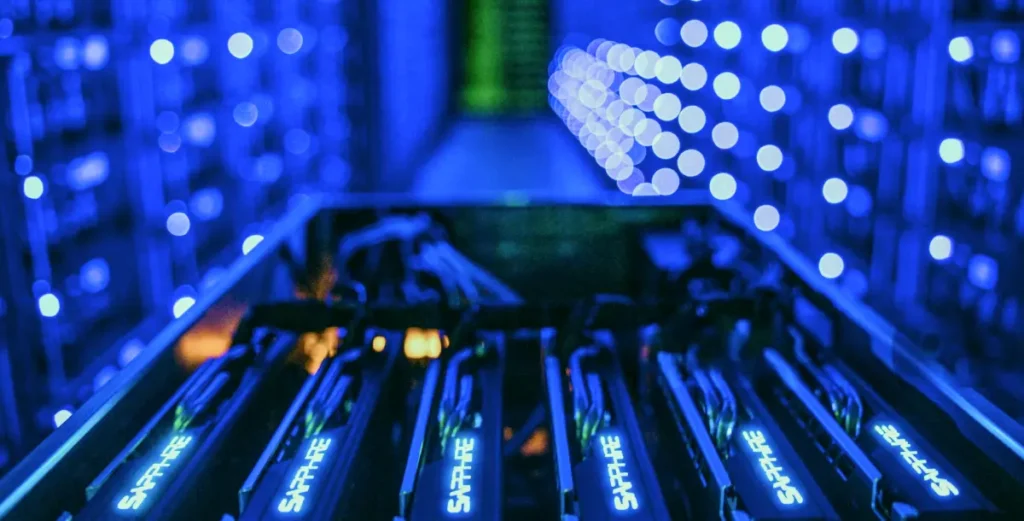
A mining pool is a coordinated group of crypto miners who combine their computational power, known as hashrate, to increase their collective chances of solving a cryptographic puzzle and validating a new block on a Proof-of-Work (PoW) blockchain like Bitcoin.
Instead of competing against each other, pool participants work together. When the pool successfully mines a block, the reward is distributed among all contributing members in proportion to the computing power each one contributed.
In 2026, with Bitcoin’s total network hashrate exceeding 1,000 EH/s and mining difficulty above 132 trillion, pooled mining is a practical necessity for the vast majority of miners. A single modern ASIC contributes a fraction of a percent of total network power — without a pool, it could run for decades without ever earning a block reward.
Benefits of Mining Pools: Why 99% of Blocks Are Mined This Way
Mining pools dominate Bitcoin block production for good reason. Here’s what they deliver for miners at every scale:
- Consistent, predictable income. Solo mining means long stretches of zero revenue followed by a single, large payout — if it ever comes. Pools smooth this out into regular payments, making it possible to budget, plan, and report revenue with confidence.
- Lower barrier to entry. You don’t need a warehouse full of ASICs to start earning. Even a single machine contributes meaningful hashrate to a pool, earning proportional rewards from day one.
- Reduced financial risk. By sharing the work and the rewards, pools absorb the variance that makes solo mining a gamble. CoinShares’ Q1 2026 mining report found that roughly 20% of miners are operating at or below breakeven — for those on the edge, the income stability pools provide can be the difference between profit and loss.
- Simplified operations. The pool handles full node maintenance, block propagation, and protocol management. You point your hardware at the pool’s server and start earning — no need to run your own Bitcoin node or manage block submission infrastructure.
- Access to advanced financial tools. In 2026, top-tier pools offer far more than just payouts. Leading platforms now provide hashrate derivatives, fixed and upfront payouts (locking in revenue before hashrate is delivered), and energy market integrations — tools that were unavailable even two years ago. For a deeper look at how these tools are evolving, see our analysis of the state of crypto mining in 2025–2026.
Top Bitcoin Mining Pools in 2026: Who Controls the Hashrate?
The pool landscape in 2026 is dominated by a handful of major platforms. Here’s how hashrate is distributed as of May 2026, based on data from Hashrate Index:
| Rank | Mining Pool | Hashrate Share | Payout Model | Region Focus |
| 1 | Foundry USA | ~34% | FPPS | United States |
| 2 | AntPool | ~15% | FPPS / PPLNS | China / Global |
| 3 | F2Pool | ~11% | FPPS / PPLNS | Global |
| 4 | ViaBTC | ~10% | PPS+ / PPLNS | Russia / Central Asia |
| 5 | SpiderPool | ~9% | FPPS | Global |
| 6 | MARA Pool | ~5% | FPPS | United States |
| 7 | Luxor | ~4% | FPPS | United States |
| 8 | SecPool | ~4% | FPPS | Asia |
| 9 | Binance Pool | ~2% | FPPS | Global |
| 10 | Braiins Pool | ~2% | FPPS | Global |
Source: Hashrate Index, May 2026.
How Mining Pools Work? The 5-Step Workflow Behind Every Block
Mining pools streamline the complex process of block validation. They act as a coordinator, distributing work to thousands of individual machines and aggregating the results. Here is the step-by-step workflow:

- Connection: A miner connects their hardware (ASIC or GPU rig) to the pool’s server using a protocol like Stratum V1 (or increasingly, the newer Stratum V2).
- Work Assignment: The pool server assigns a specific “job” to the miner. To prevent duplicate work, the pool divides the search space so each machine works on a unique range of nonces (potential solutions).
- Share Submission: As the miner works, it submits “shares” to the pool. A share is a valid proof of work that is difficult enough to prove the miner is actively contributing, but not necessarily difficult enough to solve the block itself. Think of it as a receipt of contribution.
- Block Discovery: Eventually, one miner in the pool finds a hash that meets the network’s full difficulty target. The pool submits this valid block to the blockchain for verification by the broader network.
- Reward Distribution: The network awards the block reward (currently 3.125 BTC plus transaction fees, following the April 2024 halving) to the pool’s address. The pool then calculates payouts based on each member’s share contributions and distributes the funds according to its payout model.
Stratum V2: The Protocol Upgrade Reshaping Pool Architecture
In May 2026, seven of the world’s largest mining pools such as Foundry, AntPool, F2Pool, SpiderPool, MARA Pool, Block Inc., and DMND, representing nearly 75% of global hashrate , agreed to adopt the Stratum V2 protocol. This is the most significant decentralization development in Bitcoin mining in years.
Under the legacy Stratum V1 standard, pool operators controlled which transactions go into every block they mine. Stratum V2 changes this by allowing individual miners to construct their own block templates. The pool still aggregates hashrate and manages payouts, but the power over transaction selection shifts back to thousands of individual operators.
Stratum V2 gives you a direct say in which transactions your hashrate supports, reducing the risk of censorship by pool operators and strengthening Bitcoin’s decentralization.
For enterprise operators, it also reduces the regulatory and reputational risk of being associated with a pool that might process illicit transactions. When evaluating pools in 2026, Stratum V2 compatibility should be on your checklist.
Mining Pool Reward Models: How Payouts Are Calculated and What It Means for Your Bottom Line
For institutional miners, the most critical aspect of a pool is how it calculates payouts. Different models shift risk between the pool operator and the miner in meaningful ways. The right choice depends on your operation’s risk tolerance, cash flow requirements, and time horizon.

PPS (Pay-Per-Share)
Miners receive a fixed payment for every valid share they submit, regardless of whether the pool actually finds a block. This provides guaranteed income with zero variance — you get paid for your work immediately. The trade-off is higher fees (typically 2–4%), because the pool operator absorbs all the risk of unlucky streaks. Best suited for institutions that need predictable cash flow for financial reporting and treasury management.
FPPS (Full Pay-Per-Share)
Similar to PPS, but FPPS also includes a share of the transaction fees from each block, not just the block subsidy. This means higher total revenue potential, which has become increasingly important as transaction fees grow as a proportion of total miner revenue post-halving. Fees remain in the 2–4% range. Best for large-scale operations that want to maximize revenue while maintaining stability. FPPS has become the dominant payout model among top-tier pools in 2026.
PPLNS (Pay-Per-Last-N-Shares)
Payouts are calculated only on shares submitted during a specific window (the “last N shares”) before a block is found. If the pool doesn’t find a block, nobody gets paid. The upside: significantly lower fees (0–1%), and the model perfectly aligns miner and pool incentives. The downside: higher variance. If the pool experiences a run of bad luck, your revenue drops. Best for long-term miners with sufficient capital reserves to weather income fluctuations.
PROP (Proportional)
Rewards are distributed proportionally to shares contributed during a specific “round” (the time between two found blocks). Simple and fair, but vulnerable to “pool hopping” strategies where miners jump in when a block seems imminent. Best suited for smaller private pools or cooperatives.
| Model | Fees | Risk Level | TX Fees Included? | Variance | Ideal For |
| PPS | 2–4% | Very Low | No | Near Zero | Risk-averse institutions |
| FPPS | 2–4% | Very Low | Yes | Near Zero | Revenue maximization |
| PPLNS | 0–1% | Medium | Yes | Moderate | Long-term holders |
| PROP | Variable | Medium | Yes | Moderate | Smaller private pools |
Pool Mining vs. Solo Mining: Which Path Makes Sense?
Solo mining means connecting directly to a Bitcoin full node and keeping 100% of any block you find (3.125 BTC + fees). The problem: with a single ASIC contributing a vanishing fraction of 1,000+ EH/s of total hashrate, the expected time between solo blocks is measured in decades or centuries.
You could run $1 million in hardware for years and earn exactly $0. It requires running your own node, managing connectivity, and handling block propagation. In 2026, solo mining is essentially a lottery play, but not a business model.
Pool mining delivers small, frequent payments (daily or hourly), reduces variance by over 90%, and requires minimal setup. The pool handles the infrastructure complexity. Switching pools is instant if you’re unsatisfied.
For any operation that needs to model revenue, report earnings, or plan ROI, pool mining is the only viable path. As the economic impact of crypto mining continues to grow globally, this predictability underpins the entire institutional mining economy.
The Mining Industry’s Pivot: From Block Rewards to AI and Data Center Revenue
One of the most significant shifts in the mining landscape is the convergence of crypto mining infrastructure with AI and high-performance computing.
As block rewards decline (the April 2024 halving cut rewards from 6.25 to 3.125 BTC) and mining margins tighten, many operators are repurposing their data center infrastructure for AI training, machine learning inference, ZK-proof generation, and decentralized cloud services. The hardware, cooling systems, and power infrastructure that support mining are directly applicable to AI compute workloads.
Major publicly traded mining companies, including Riot Platforms, Core Scientific, and Applied Digital, have rebranded as “digital infrastructure providers” and are actively pivoting to hybrid mining and AI compute models. CoinShares estimates that this AI pivot is contributing to a temporary decline in network hashrate, creating a window where remaining miners on efficient hardware benefit from both lower difficulty and rising hashprice.
For miners evaluating their long-term strategy, this convergence means mining pools are no longer just about block rewards. The most forward-looking pools are evolving into full-stack infrastructure platforms that integrate energy optimization, hashrate derivatives, cloud mining services, and compute diversification.
The Future of Mining Pools: From Simple Aggregators to Full-Stack Financial Platforms
Mining pools are undergoing a fundamental transformation. In 2026, the competitive frontier has moved well beyond simple hashrate aggregation. The leading pools are evolving into comprehensive infrastructure and financial platforms.
Hashrate Financialization
Hashrate is increasingly treated as a tradeable financial commodity. Pools now offer hedging products, hashrate derivatives, fixed and upfront payouts, and direct integrations with energy markets. This allows miners to de-risk revenue and manage exposure in ways that were impossible just two years ago. For a deeper look at how mining infrastructure is evolving, see our analysis of hybrid mining and AI compute integration.
Energy Integration
Top pools are building direct integrations with power grids, demand-response programs (like ERCOT in Texas), and renewable energy providers. This allows mining operations to dynamically adjust their output based on grid conditions and energy pricing, improving both sustainability and profitability.
AI and Compute Diversification
Mining data centers are increasingly doubling as AI compute facilities. As traditional mining margins face pressure from halvings and rising difficulty, operators are repurposing excess infrastructure for AI training, ZK-proof generation, and decentralized cloud services. For more on this trend, read our guide on cloud mining for enterprises.
Compliance-First Operations
Institutional capital has forced higher standards around compliance, with leading pools achieving SOC 2 certification, implementing KYC/AML procedures, and building transparent reporting infrastructure. The regulatory landscape in 2026 demands that mining be treated more like a regulated utility than a freewheeling operation.
Partner with Enterprise-Grade Infrastructure
For the enterprise, the choice of a mining pool is no longer just about fees — it’s about partnering with a provider that offers the technical stability, regulatory readiness, and financial tooling required to scale. ChainUp partners with institutions to deliver enterprise-grade solutions across mining, staking, custody, and blockchain infrastructure.
Ready to optimize your mining strategy for this new era? Contact ChainUp today to learn how our enterprise-grade solutions can support your growth in the digital asset ecosystem.