51% Attacks Explained: Lessons from Ethereum Classic, Bitcoin Gold, and Beyond

Key Takeaways A 51% attack allows a single malicious entity to rewrite blockchain history and double-spend funds by controlling more than half of a network’s mining power or hash rate. Smaller and newer blockchains are disproportionately vulnerable, with research showing that 85% of successful attacks between 2018 and 2024 targeted chains in their first three […]
Decentralised apps (DApps) – How Do They Work?
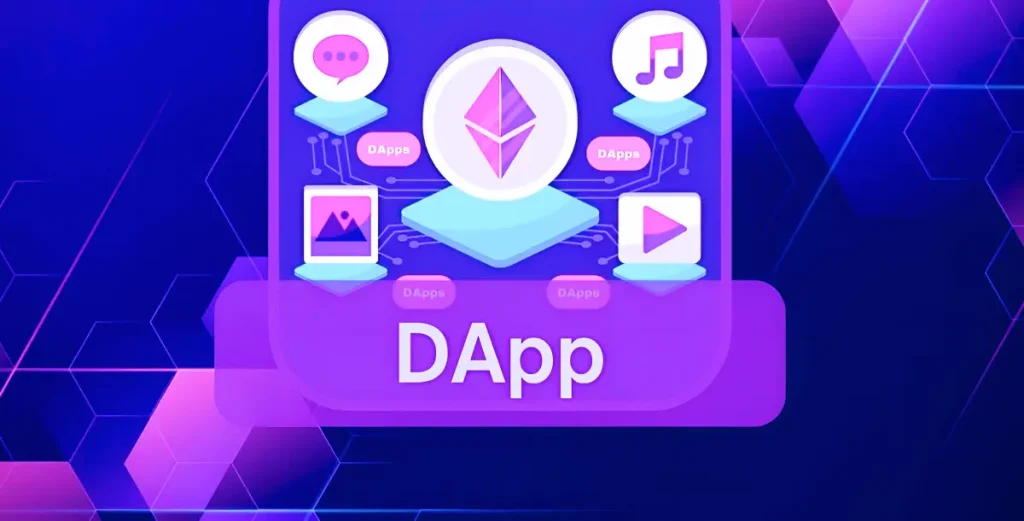
Key Takeaways Centralized applications exploit user data, suffer from single points of failure, and restrict true asset ownership. DApps eliminate these intermediaries by running on transparent, automated blockchain networks and smart contracts. This structural shift provides global access to secure, user-owned ecosystems across finance, gaming, and enterprise supply chains. Nearly 24% of all global […]
How AI Agents Are Transforming Crypto: A Builder’s Guide to Autonomous Systems

Key Takeaways AI agents are autonomous, goal-driven systems that perceive, reason, and act on-chain, going far beyond rule-based bots or chatbots. The global AI agents market is projected to surpass $10.9 billion in 2026, with 40% of enterprise apps expected to embed task-specific agents by year-end. In crypto, AI agents already execute arbitrage, rebalance DeFi […]
The Future of Cash Management: Fidelity International’s First Tokenized Fund Secures Moody’s Top AAA-mf Rating

Key Takeaways Traditional cash management forces institutional investors to choose between earning yields in locked funds or leaving capital idle for immediate trading availability, creating significant liquidity drag. Fidelity International’s Ethereum-based Fidelity USD Digital Liquidity Fund (FILQ) has bridged this gap, securing Moody’s highest AAA-mf rating alongside BlackRock’s BUIDL fund. By leveraging infrastructure from Sygnum […]
The Hyperliquid Engine: High-Performance DEX Architecture

Key Takeaways: Traditional DeFi struggles with the “Latency-Liquidity-Cost” trilemma, plagued by high gas fees, slow execution, and general-purpose network congestion. Hyperliquid has emerged as a top-three fee-generating protocol in 2026, clearing over $4 trillion in volume by “perpifying” everything from crypto to tokenized oil and gold. Hyperliquid utilizes a custom L1 architecture (HyperCore/HyperBFT) to deliver […]
What Is a Governance Token? How Decentralized Decision-Making Powers the Future of Crypto

Key Takeaways Governance tokens are cryptocurrencies that provide voting power over protocol decisions such as fee structures, treasury allocations, and code upgrades, replacing centralized boards with community-driven consensus. Major players like Apollo and BlackRock are acquiring tokens not for speculation, but to secure influence over decentralized financial infrastructure. Protocols like Uniswap, MakerDAO, and Aave use […]
What is a Sidechain? Understanding Independent Blockchain Scaling

Key Takeaways: A sidechain is an autonomous blockchain with its own consensus mechanism, running parallel to a mainnet like Ethereum. Unlike Layer 2 rollups, a sidechain is responsible for its own security and validator set. Sidechains enable high-volume applications such as blockchain gaming and institutional tokenization by offering sub-cent transaction fees. Secure cross-chain bridges allow […]
What is Polygon? Scaling on Ethereum L2 Network
Key Takeaways: Polygon is a Layer-2 (L2) scaling solution that offloads transaction volume from Ethereum to improve speed and cost-efficiency. Transactions on L2 like Polygon cost a fraction of a cent, eliminating the high “gas” barriers of the Ethereum mainnet. The native ecosystem token has transitioned from MATIC to POL, serving as a hyperproductive token […]
Top 5 Crypto Remittance Platforms for 2026

Key Takeaways: The global crypto remittance market has surged to over $132 billion, with the U.S. outbound corridor alone accounting for a record $35.84 billion of that total value. Stablecoins now account for over 85% of all digital cross-border transfers, shielding users from price volatility. Leading crypto remittance platforms offer settlement times of seconds and […]
What Is DAI? How This Decentralized Stablecoin Maintains Its $1 Value
Key Takeaways DAI is a decentralized stablecoin that maintains a soft peg to the U.S. dollar through a system of smart contracts rather than cash reserves. To mint DAI, users must over-collateralize their positions with crypto assets, ensuring there is always more than $1 of value backing every token. The DAI peg is maintained through […]