Key Takeaways
- A self-custody wallet (also called non-custodial) means you, and only you, hold the private keys to your crypto, without relying on third-party intermediaries.
- Self-custody gives you full ownership, better privacy, and direct access to Web3 — but it also places full responsibility on you.
- Custodial wallets hand key control to a third party like an exchange, trading true ownership for convenience.
- Self-custody comes in several forms: hot (software) wallets, hardware wallets, and paper wallets, each suited to different needs and risk profiles.
- Basic individual self-custody creates severe operational bottlenecks and single-point-of-failure risks for enterprises. Institutions require Multi-Party Computation (MPC) or multi-signature infrastructure to balance control with compliance.
In February 2025, North Korean state-linked hackers drained $1.5 billion from the Bybit exchange in a single attack, the largest crypto exchange hack on record. It’s the kind of event that keeps a now-standard phrase in crypto alive: “Not your keys, not your coins.”
Across 2025 alone, an estimated $2.87 billion was stolen in nearly 150 exchange and platform hacks, and the message is landing.
The Bybit hack wasn’t a case of users making a mistake. Security incidents of this scale highlight a fundamental architectural distinction: the management of private keys. Whether utilizing institutional-grade centralized infrastructure with segregated key management or adopting decentralized self-custody models, securing asset ownership remains the primary focus. Every industry shift ultimately prompts the same core question for institutions and users alike: how is key authority structured, and how robust is the underlying wallet architecture?
Roughly 59% of crypto wallet users worldwide now prefer self-custody wallets over custodial ones, and self-custody awareness among crypto users sits at around 71%.
For anyone entering the digital asset space today, a self-custody wallet is one of the first tools worth understanding.
What Does Self-Custody Mean?
At its simplest, a self-custody wallet (also known as a non-custodial wallet) is a digital wallet where you, and only you, hold the private keys.
Think of it like cash in a home safe versus money in a bank account. Put money in a bank, and the bank technically owes you a debt. It can freeze your account, limit withdrawals, or, in rare cases, go under. Put cash in a safe at home, and you have total control. Nobody can stop you from accessing it, but if you lose the combination, nobody can help you get it back either.
In crypto, self-custody means you interact directly with the blockchain. There’s no middleman approving your transactions or safeguarding your assets. That’s absolute freedom and absolute responsibility over your Bitcoin, Ethereum, or other digital assets.
Self-Custody vs. Custodial Wallets: What’s the Difference?
Every crypto wallet falls into one of two categories, based on one question: who holds the private key?
In a custodial arrangement, a regulated platform or third-party provider manages key infrastructure on behalf of the user or institution. Operating much like traditional financial services, this model offers seamless user experiences, operational ease, account recovery options, and integrated trading capabilities. Security relies on the provider’s enterprise infrastructure, internal governance frameworks, and institutional compliance standards.
A self-custody framework shifts direct key management to the user or organization. Without an intermediary, the wallet holder generates and maintains their private keys—whether through hardware devices, distributed key shares, or local storage—and directly authorizes transactions. This offers complete autonomy and eliminates third-party reliance, though it places total responsibility for key backup and access management on the holder.
Ultimately, choosing between custodial and self-custody solutions comes down to balancing operational convenience, risk management preferences, and internal control requirements. Modern digital asset strategies frequently combine both approaches to meet diverse enterprise and retail needs.
What Are Your Options? Types of Self-Custody Wallets
Self-custody is a category of wallet types, each with a different balance of security and convenience. Choosing the right one depends on how much crypto you’re holding, how often you need to move it, and how much risk you’re willing to manage yourself.
| Wallet type | How it works | Best for | Trade-off |
| Hot/software wallet (e.g., MetaMask, Trust Wallet) | App or browser extension; keys stored on an internet-connected device | Everyday transactions, DeFi, dApps | Convenient, but exposed to online threats |
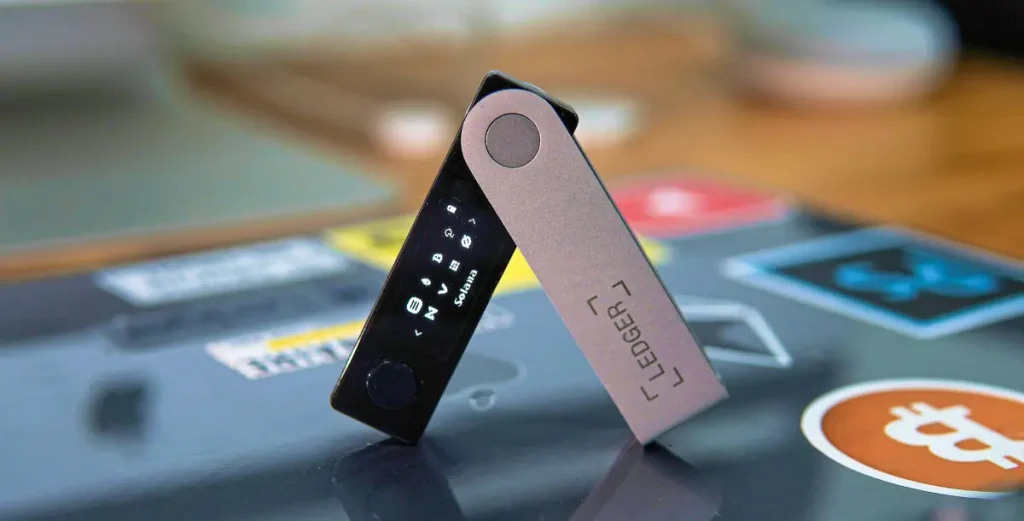
| Hardware wallet (e.g., Ledger, Trezor) | Physical device; keys generated and stored offline | Long-term holdings, larger balances | Most secure for storage, less convenient for frequent trading |
| Paper wallet | Private key or seed phrase printed or written down | Cold backup, one-time deep storage | Immune to hacking, but easy to lose, damage, or misplace |
| Custodial wallet (e.g., an exchange account) | A third party holds the keys on your behalf | Beginners, active trading | Easiest to use, but you don’t truly own the assets until you withdraw them |
Most people end up using more than one: a hot wallet for day-to-day activity, paired with a hardware wallet for anything they don’t touch regularly.
Why Self-Custody Matters
True Ownership of Assets
The core benefit is uncompromised ownership. Assets in a self-custody wallet live on the blockchain itself, not in a company’s internal database. That removes the risk of an exchange freezing your funds over a liquidity issue or a regulatory order.
Enhanced Privacy
Custodial exchanges typically require ID verification (KYC) to open an account. Self-custody wallets don’t require personal information to generate an address, preserving a degree of privacy that’s closer to crypto’s original design intent.
Access to Web3
A self-custody wallet is the passport to decentralized apps, NFT marketplaces, and DeFi protocols. A centralized exchange account can’t connect directly to these services; a self-custody wallet can, allowing you to swap tokens, stake assets, or play blockchain games without an intermediary.
No Counterparty Risk
Remove the custodian, and you remove the single point of failure. There’s no platform solvency to worry about. The safety of your funds depends entirely on how well you protect your private keys and which smart contracts you interact with.

What Makes a Self-Custody Wallet Secure?
If you’re “being your own bank,” security is everything. A few components matter most:
- Private keys and seed phrases. The private key authorizes outgoing transactions. Since it’s hard to remember on its own, wallets generate a 12- or 24-word seed phrase as the master backup. Lose your device, and the wallet can be restored elsewhere with just this phrase, but lose the phrase too, and the funds are gone for good.
- Multi-signature (multisig) setups. Some wallets require approval from more than one device or key before a transaction goes through, which is useful for preventing a single compromised device from draining the entire balance.
- Biometric authentication. Mobile wallets increasingly use a phone’s Face ID or fingerprint sensor as a second layer before signing a transaction.
Should Institutions Use Self-Custody Wallets?
Individuals taking self-custody of a personal portfolio is one thing. An institution holding client or treasury funds is a different question entirely, and self-custody is generally not the recommended setup at that scale.
| Self-custody | Institutional custody | |
| Key control | Held by one person or a small internal team | Distributed across the MPC or multi-party signing infrastructure |
| Compliance | No built-in audit trail, KYT, or AML tooling | Built-in transaction monitoring and compliance reporting |
| Operational risk | Single point of failure if a key holder leaves, loses access, or is compromised | Designed around succession, approvals, and segregation of duties |
| Best fit | Personal holdings | Client funds, treasuries, regulated entities |
Two problems consistently arise when institutions try to run self-custody the way an individual would. The first is operational: a treasury controlled by a single wallet, or a small group with signing rights, creates a single point of failure that doesn’t scale with headcount changes, succession planning, or 24/7 operations.
The second is compliance: regulators increasingly expect audit trails, transaction monitoring, and segregation of duties that a basic self-custody setup simply isn’t built to provide.
That’s why the general guidance for institutions differs from that for individuals. Self-custody can work in theory, but it wasn’t built for the operational and regulatory demands institutions carry.
What works instead is distributing control rather than concentrating it. Institutional-grade custody splits signing authority across multiple parties using MPC (multi-party computation) or multi-signature infrastructure, so no single compromised key, device, or employee can move funds alone.
Built-in compliance tooling, transaction monitoring, audit trails, and role-based approvals close the gap that a basic self-custody setup leaves open. The result is a setup that still keeps assets on-chain and under the institution’s control, without depending on any one person to hold the keys.
Self-Custody Is a Tool, Not a One-Size-Fits-All Answer
Self-custody puts real ownership back in the hands of everyday crypto users, and for personal holdings, it’s hard to beat. The trade-off is real too: lose your seed phrase, and there’s no “forgot password” button on the blockchain.
The right setup comes down to who the funds belong to. A hardware wallet for personal savings, a hot wallet for daily use, self-custody scales well as long as one person is accountable for one set of keys. Once funds belong to clients, shareholders, or a treasury, that same setup becomes the liability the Beanstalk exploit exposed, and the responsible move is to distribute control rather than concentrate it in a single wallet.
When interacting with platforms built on robust backend technology, user safety depends directly on the strength of the underlying setup. When using a platform supported by ChainUp’s white label MPC wallet infrastructure, users benefit from institutional-grade Multi-Party Computation (MPC) and distributed key management—ensuring asset protection without sacrificing seamless functionality.